
VOL 27 ISSUE 40, October 12, 2026
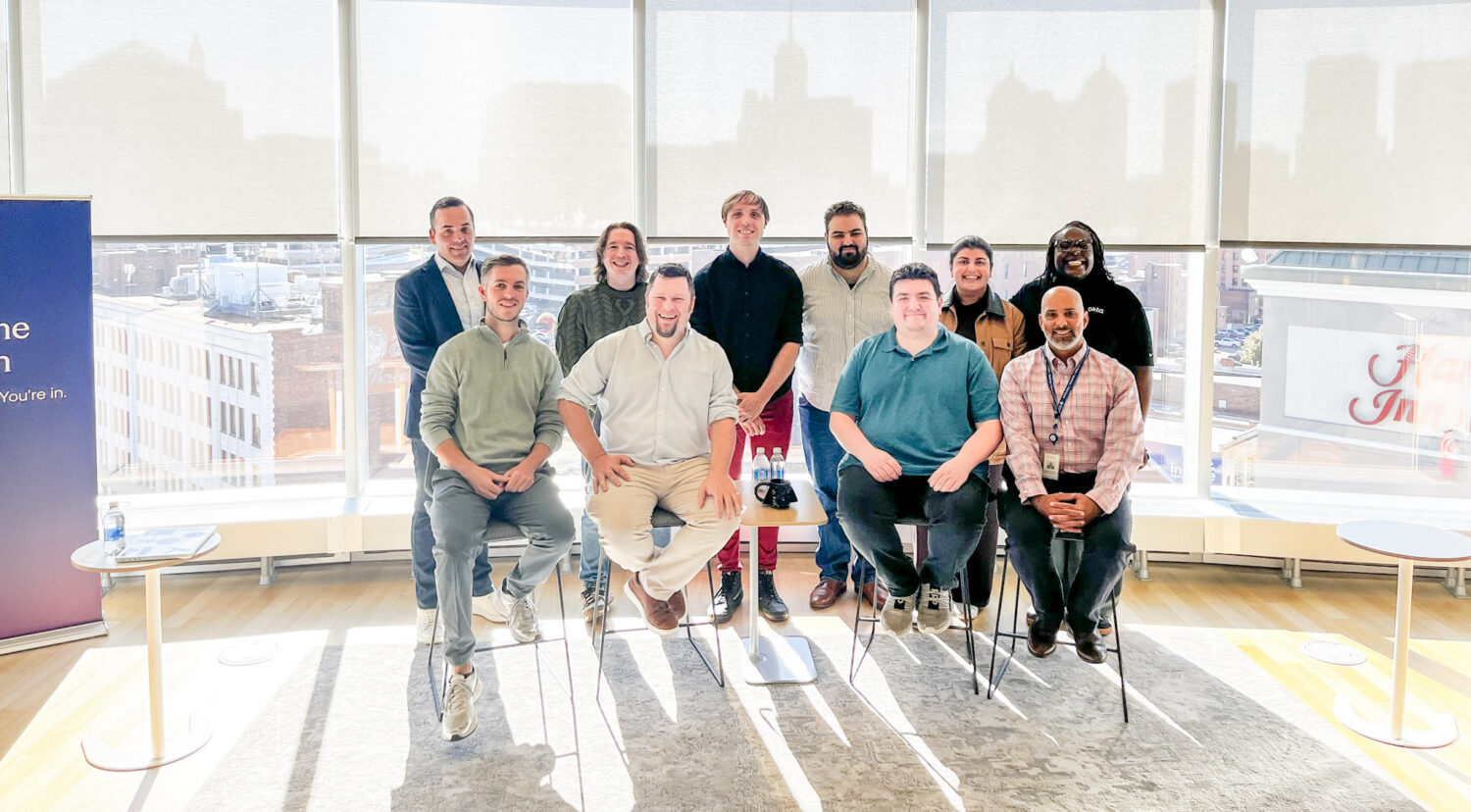
Main caption: Delaware North’s Cybersecurity team on Oct. 6 hosted a Social Engineering Awareness presentation at corporate headquarters in Buffalo and on Microsoft Teams. Pictured in the back row, left to right, are John Mulledy, account director, Okta; Michael Reed, cybersecurity engineer, Delaware North; Kyle Rauschelbach cybersecurity engineer, Delaware North; Logan Ramhap, cybersecurity engineer, Delaware North; Shivani Ginde, customer success executive, Okta; and Amminah Mosby, technical account director, Okta. Pictured in the front row, left to right, are Andrew Colling, cybersecurity engineer, Delaware North; Steve Mitchel, cybersecurity engineer, Delaware North; John Miranda, cybersecurity engineer, Delaware North; and Brian Dudek, director of cybersecurity, Delaware North.
Cyber criminals have found the most consistent way to gain access to a company’s resources, data and financials is by targeting their employees. That message and how Delaware North and its team members can spot, avoid and report sophisticated cyber-attacks were highlighted in a Social Engineering Awareness presentation on Tuesday, Oct. 6 at Delaware North’s corporate headquarters in Buffalo.
Company cybersecurity experts teamed up with partners from Okta, a leading identity and access management platform used by Delaware North, to deliver a Cybersecurity Awareness Month presentation to team members attending both in person and on Microsoft Teams.
Social engineering, which refers to when an attacker tricks a targeted user into divulging sensitive information, can take multiple forms, according to Steve Mitchell, lead cybersecurity engineer. The use of Artificial Intelligence (AI) can make attacks quicker and more sophisticated.
“They are going to email you, they are going to call you … and they are going to text you. Not only are they going to do that to your work contacts, but they are going to find your personal contacts to get to you, to try to get you to take action,” Mitchell said.
Bad actors pose as IT support, try to sell users fake gift cards and impersonate executives on personal services such as WhatsApp. In addition to those more “classic” scams, the presentation highlighted other ways scammers target people, including posing as real-time automated customer support chatbots, impersonating others with audio and images, and optimizing search engines to post malicious links.
Okta’s threat intelligence team conducts extensive research into the enterprise in place behind these scams, and how easy they make it for bad actors to target their victims, according to Matt Immler, Okta’s regional chief security officer for the Americas.
“Don’t think of these as individual people who go around trying to steal your information or access your company’s data. These are larger criminal enterprises that really structure themselves almost like any other business. It’s just that what they are conducting is illegal,” Immler said. “They are incredibly well organized; they are incredibly well staffed and there is a lot of money behind it.”
Brian Dudek, director of cybersecurity, and cybersecurity engineers Andrew Colling, John Miranda, Logan Ramhap, Kyle Rauschelbach and Michael Reed answered questions and presented systems, programs and expertise in place to keep company devices secure and data private. This includes the team’s threat intelligence operations, combining publicly available reporting, vetted information from across the industry through a membership to the Retail & Hospitality Information Sharing and Analysis Center (ISAC), and their own cyber tool detections and analysis.
Cybersecurity works daily to keep team members engaged and informed, including through annual cybersecurity training, phishing and social engineering simulations, and ongoing internal communications about how to avoid and report cyber threats.
In an ever-changing cybersecurity landscape, team members left the presentation receiving a clear call to document any suspicious messaging and immediately contact the Delaware North Global IT Service Desk at (877-362-4843) with all reports, questions and concerns.